This post will be about how fasting works for healing and weight loss. I want you to better understand fasting because, from where I’m sitting, I have seen it done more wrong than right. I strongly believe the reason for that is because many people don’t understand the true purpose of fasting, what it is, how it works, and how it can be properly applied to their life, their health, and, of course, their weight loss goals. I am a huge fan of fasting, and I have incorporated its various techniques into my life for about 10 years. To this day, I still enjoy its physical, emotional, and spiritual benefits.
 The Definition of Fasting
The term fasting is used loosely, meaning different things to different people. So to make sure we are on the same page, I’m going to start off by sharing the definition of fasting.
Fasting means going without food for a definite period of time.
The word fast comes from the Old English word faesten, which means firm or fixed. When I first learned about that, I had to ask myself, “What does firm or fixed have to do with fasting?” And I thought about that. When you fast, it’s intentional. It’s a choice. You are making a firm decision to abstain from foods under controlled or fixed conditions. Think about it. When you make a firm decision, nothing or no one will turn you away from that decision. They are your terms, and you decide specifically how you’re going to do it, and most importantly, why you’re going to do it. Fasting is more than just not eating food. To fast takes discipline. It takes strength and self-control. And these are just a few reasons fasting is so powerful.
What most people call fasting isn’t true fasting; it’s more like food elimination. They’re actually abstaining from certain foods but can still eat whenever they want. This isn’t considered fasting according to its definition. For example, in a juice fast, they abstain from everything but juice, but they can still drink whenever they want. There’s no definite period of time that they’re not consuming juice. In the Daniel Fast, they are abstaining from certain foods for 21 days, such as meat, sugar, and alcohol. But they can still eat or drink whenever they want. So technically this isn’t a fast either. They are not going without food for a definite period of time. Conditions apply to what they can eat, but not when they can eat. During the religious fast, Ramadan, Muslims abstain from all food and water from sunrise to sunset. This is more of a fast, by definition, because they don’t eat for a specific amount of time.
What Fasting is NOT
Fasting is not the same as starving. It’s not even close. Fasting allows the body to restore itself by tapping into stored energy. The body is still eating. It’s just using stored energy to fuel itself. Fasting is a choice. And when you’re ready to eat, you can eat. Remember, with fasting, it’s firm; it’s fixed. It’s something you choose to do. It’s something you have control over.
Starvation is a process of dying. This happens when food is denied for a prolonged period and stored reserves are used up. Therefore, fasting is more intentional. Where starvation is not. That’s the difference.
Fasting is also not to be confused with calorie restriction. Calorie restriction focuses more on portion control and a pattern of reducing average daily caloric intake. Fasting focuses on the frequency of eating or how long you go without eating. Fasting also triggers beneficial hormonal changes that don’t occur with calorie restriction.
Why Fasting is Needed
Understanding fasting and how it works is needed now more than ever. Somehow, the true purpose of fasting and how it was used centuries ago has gotten lost in the sauce, and it has become more of a fad or a challenge or something that us fanatic, holistic doctors love to do, and we get labeled as crazy for doing so. Fasting is needed so badly because society as a whole cannot stop eating. Seriously. We eat when we wake up. We eat before we go to bed, and snack anywhere in between. We eat when we’re watching TV, when we’re driving, when we’re working, when we’re hungry, when we’re full. We eat when we’re happy; we eat when we’re sad. We eat to celebrate. We eat to mourn. Our waking hours are literally revolved around food, and despite what we have been told by the food and diet industry, such as: don’t skip meals; breakfast is the most important meal of the day; snack between meals; eat your six to 11 servings of whole grains. The list goes on and on. And this advice has not only increased our waistlines, but also their profits.
This is what happens when you eat. Every time you eat, your digestive system breaks down food and eventually converts it into glucose. Proteins, fats, and carbs all increase insulin, but it’s the carbs that increase it more than the proteins and fats. This increase of glucose in the bloodstream stimulates the release of the hormone insulin, which controls glucose levels in your body. All cells in your body need glucose. For example, your brain, heart, and reproductive organs need glucose to function. So to be healthy, this metabolic system needs to be in balance.
Glucose that isn’t used immediately is turned into glycogen in the liver. This process is called glycogenesis. This is how the body stores glucose for later use. The liver has limited space for glycogen, so when it becomes full, excess glucose is turned into fat; this process is called lipogenesis.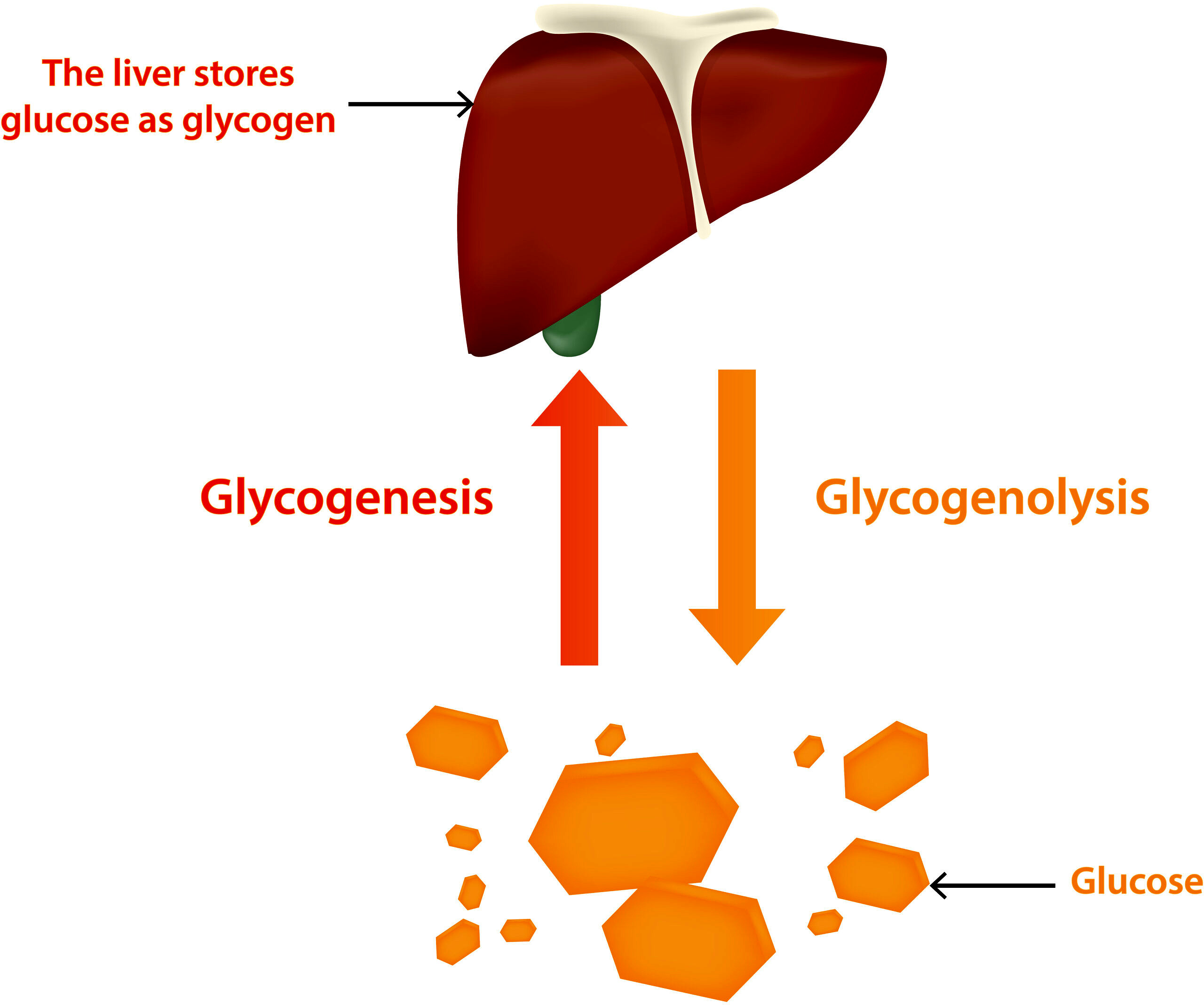
When insulin is high, glycogen and fat storage are turned on. When insulin levels are low, this signals the body to burn stored fat and glycogen for energy. If you’re eating all day long, at least every couple of hours, insulin levels stay elevated, especially if you’re consuming foods high in sugar and refined carbohydrates. This is very harmful to the body.
The root of metabolic diseases such as obesity, type two diabetes, and high blood pressure is chronic, elevated insulin. And when the body is in this state, it spends more time in fat-storing mode than it does in fat-burning mode. Therefore, weight increases over time.
Signs of Poor Glucose Metabolism
Glucose isn’t the enemy here; it’s the imbalance of glucose that’s the enemy. Remember, your body needs glucose to maintain the metabolic functions that keep you alive. Some of you may experience feeling shaky or lightheaded if you go longer than two or three hours without eating. This is not a healthy response. This is a sign of poor glucose metabolism and is due to insulin overcompensation that brought your glucose levels too low. This happens, especially after a high-carb meal.
You may have been told to carry around snacks, which are more than likely very high in sugar and carbohydrates. But because you feel better after you snack, you keep repeating this vicious cycle over and over again. If this is happening to you and your sugar does drop like that, that means you are more of a sugar burner than a fat burner. So your body relies on glucose, or carbs, for energy. To correct this, you need to reduce processed, refined carbs such as white flour, cookies, pies, and granola bars. Start slow, then extend the time between meals, and in most cases it will correct itself over time.
What Happens When We Fast?
When I’m coaching my clients and start talking about fasting, I occasionally get pushback because we’ve been told to eat every two hours and not skip meals. I get that. I used to believe that as well. But when I start explaining what happens during a fast, they get really motivated. This is what happens when we fast:
24 to 36 hours after the fast begins. Several hours after a meal, the blood sugar and insulin levels start to drop. When the insulin levels start to drop, the liver starts to reverse glycogen storage. As the body processes glucose, glycogen is stored in the liver, and this is what maintains your energy in the short term, such as when you’re sleeping. The liver reverses glycogen storage by breaking down stored glycogen into glucose and releasing it into the bloodstream for energy. And these glycogen stores are depleted in about 24 to 36 hours.
Also, during the fast, growth hormone spikes. We know our younger people have an abundance of this growth hormone. This helps them grow and develop, but as we get older, this hormone decreases, and lower levels of growth hormone lead to more body fat and decreased muscle and bone mass. When you fast, you actually boost your own growth hormone. This helps maintain muscle and bone mass.
This happens in the first 24 to 36 hours of your fast. You’re depleting your glycogen stores and increasing your growth hormone.
48 hours after the fast begins. The first couple of days of fasting are typically the hardest, especially if you’ve never fasted before. But there are ways to work up to longer fasts. But just know it’s the second and third day and beyond where the magic begins to happen. After the glycogen stores are depleted, the body starts to break down stored fat for energy, and I’m talking about all that fat under the skin and the fat around the organs. This is the fat that you want to burn. When this happens, the body runs on ketones, which are the preferred fuel for energy. The brain loves ketones. When I get to this point of my fast, I have so much more mental clarity and focus. Ketones also suppress your appetite, and you no longer feel the urge to eat. Usually you have to fight those urges to eat in those first couple of days, but once you get beyond that, it’s much easier to continue.
The best part about going beyond the first 48 hours is that the control that food used to have over you goes away. That’s why fasting has become such a spiritual or emotional benefit: you start to develop the self-control and discipline that comes with it.
Also, during this stage of fasting, inflammation decreases significantly, your gut starts to heal, tumors start to shrink, and your immune system improves. To repair and bring in new tissue, it has to get rid of the old tissue. This mechanism is known as autophagy. This is when the body breaks down and recycles old, damaged cells and proteins and transforms them into new and improved materials.
This process happens on the second and third days of your fast and beyond. That’s why, when I’m coaching my clients, I encourage and monitor them as they get to at least four days, so they can benefit from that extra day or two of healing and restoration. Many of my clients found that by the third or fourth day, it is easier to go beyond that because when those ketones kick in, they don’t have the appetite anymore. They don’t have that urge to eat anymore. They start to feel better; they start to look better. Those small wins encourage them to keep moving forward.
I’m trying not to get too sciencey with all this. My purpose is to give you the big picture of how fasting works for healing and weight loss, because I want you to be interested in learning how to do this as well. This may be the answer you’ve been looking for, especially if you’ve been struggling with weight loss resistance or some other chronic health issues.
Benefits of Fasting
Chronic conditions, such as type two diabetes, heart disease, and autoimmune disease, have been healed or managed with prolonged fasting. Other benefits include managing gut issues such as Crohn’s disease and irritable bowel disease, stabilizing blood sugar, improving energy and focus, and clearing up skin conditions such as psoriasis and eczema. Fasting reverses the aging process, helping you look and feel younger. It can extend your life. It can strengthen your immune system and break weight-loss plateaus. The more you understand fasting and how it works, the better you can apply it. I have found that when nothing else works, fasting is almost always the answer, and I’ve seen it as the most effective way to heal the body.
When many people decide to embark on a new healing or weight loss journey, the first thing they think about is, What do I eat? and How do I prepare it? But it’s very liberating to just step back and think about when not to eat. Because sometimes less is more. So, don’t underestimate the power of fasting and how it can really transform your health and your life.
My Fasting Journey
Let me share a quick story about my fasting journey, which I started about 10 years ago. It was a process. First, I changed my diet. By reducing those refined carbs and sugars. Then I stopped snacking between meals. I was still doing three meals a day, but I wouldn’t snack in between. Then I started going into intermittent fasting.
You may already be familiar with intermittent fasting. It’s gotten more popular in these last couple of years. In case you don’t know what it is, intermittent fasting is when you abstain from food for a designated number of hours. For example, when I started fasting, I worked up to an 18:6 schedule. That means in a 24-hour day I fasted for 18 hours and ate in that six-hour window. For a long time, the window I allowed myself to eat was between noon and 6:00 PM. This is what I mean by fasting, not being calorie restriction. I didn’t eat less; I just ate less often. I ate what I typically spread out throughout the day within that six-hour window. Intermittent fasting has also helped me develop the discipline and self-control that I needed for the longer fast.
I did intermittent fasting for about a year before I tried my first 24-hour fast. Then I started incorporating a 24-hour fast into my routine about one day a week. Then I moved on to a four-day fast. I did a four-day bone broth fast every month for almost a year, until I lost 70 pounds. It took me two years to lose 70 pounds. This isn’t quick and easy weight loss, but it’s effective because I’ve lost the weight and kept it off. Fast forward to today, I still keep my diet low in refined carbs and sugars, and I still continue to do intermittent fasting. Once or twice a week, I do a 24- to 36-hour fast, and I do a longer fast as needed.
 Fasting is to be Used as Part of a Healthy Lifestyle
Fasting is meant to be part of a healthy lifestyle, not a replacement for it. So when I’m not fasting, I make sure I’m eating foods that nourish and build my body. This is how I coach my clients. I don’t jump into fasting right away. I teach them about healthy eating habits. Start slowly and don’t jump into fasting or intermittent fasting right away. Start by eating low-inflammatory foods and reducing those refined carbs and sugars. Then, after you reduce that, start to eliminate snacking; stop snacking between meals or while you’re watching TV. You need to stop grazing and snacking on popcorn, nuts, and chips. Once you can eliminate snacking, move on to intermittent fasting and build up from there.
For starters, skip breakfast or delay it. Some of you eat in the morning when you’re not even hungry. Learn to listen to your body. Go easy at first. Set a goal. Then build from there, exploring different fasting variations. Get clear on what you want to achieve and what you want to accomplish with fasting. That’ll help you decide what type of fasting to do and how long to do it for. Then you discover what works for you as you create your healthy lifestyle routine.
Takeaways
- Fasting is going without food for a definite period of time
- Fasting is not to be confused with starving or calorie restriction
- Fasting allows the restoration of the body as it taps into its stored energy
- Fasting techniques done properly can convert your body from a glucose burner to a fat burner
- Fasting is to be used as part of a healthy lifestyle, not instead of one
- Fasting is flexible (and it doesn’t cost you a thing, by the way)
- Fasting can save your life
Want to better understand what your body may be trying to tell you?
Take the Metabolic Reset Quiz to identify where your health may need more support and what to focus on next.
Take the quiz at: TheMetabolicResetQuiz.com
And until next time, go out there and achieve more freedom in your health and your life!